I composted in an open pile for two years and produced more raccoon visits than usable soil. The pile was too wet, too compacted, smelled terrible, and took 6–8 months to break down into anything resembling compost. I knew composting worked in theory — the execution was the problem.
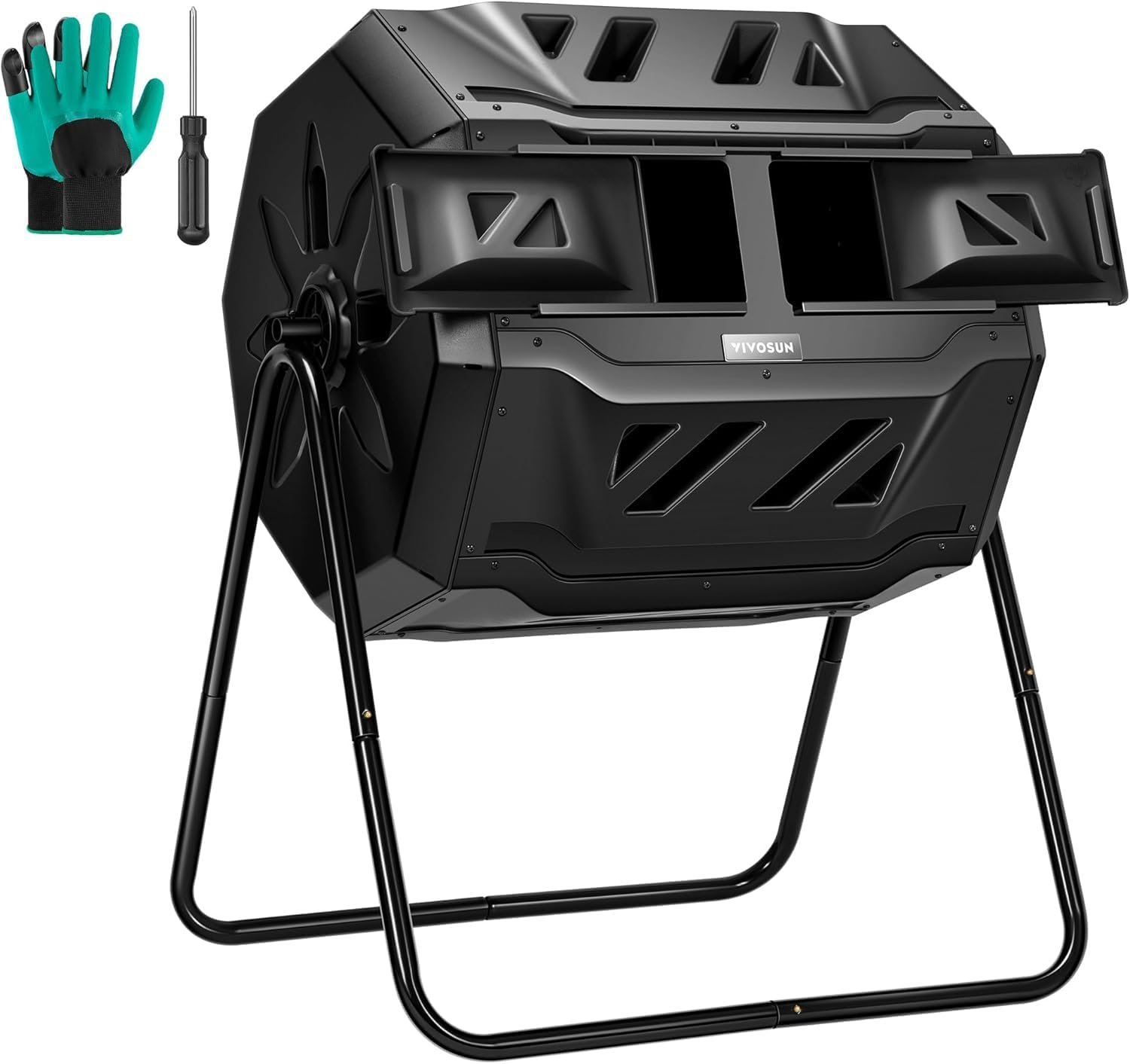
A dual-chamber compost tumbler fixed every issue. The sealed drum keeps animals out, the spinning mechanism aerates the contents without turning by hand, and the dual chambers let me fill one side while the other finishes. I had usable compost in three weeks during warm weather — faster than I’d produced anything in two years of open-pile composting.
The Dual-Chamber Tumbler Built for Kitchen and Garden Waste
This is one of Amazon’s top-rated compost tumblers in the $80–$150 range — featuring two independent chambers, a sealed rotational design, ventilation ports for airflow, and 35–45 gallon total capacity for household food waste and yard trimmings.
What makes a compost tumbler work where open piles fail:
– Sealed drum — keeps raccoons, rats, and other pests completely out of your food waste
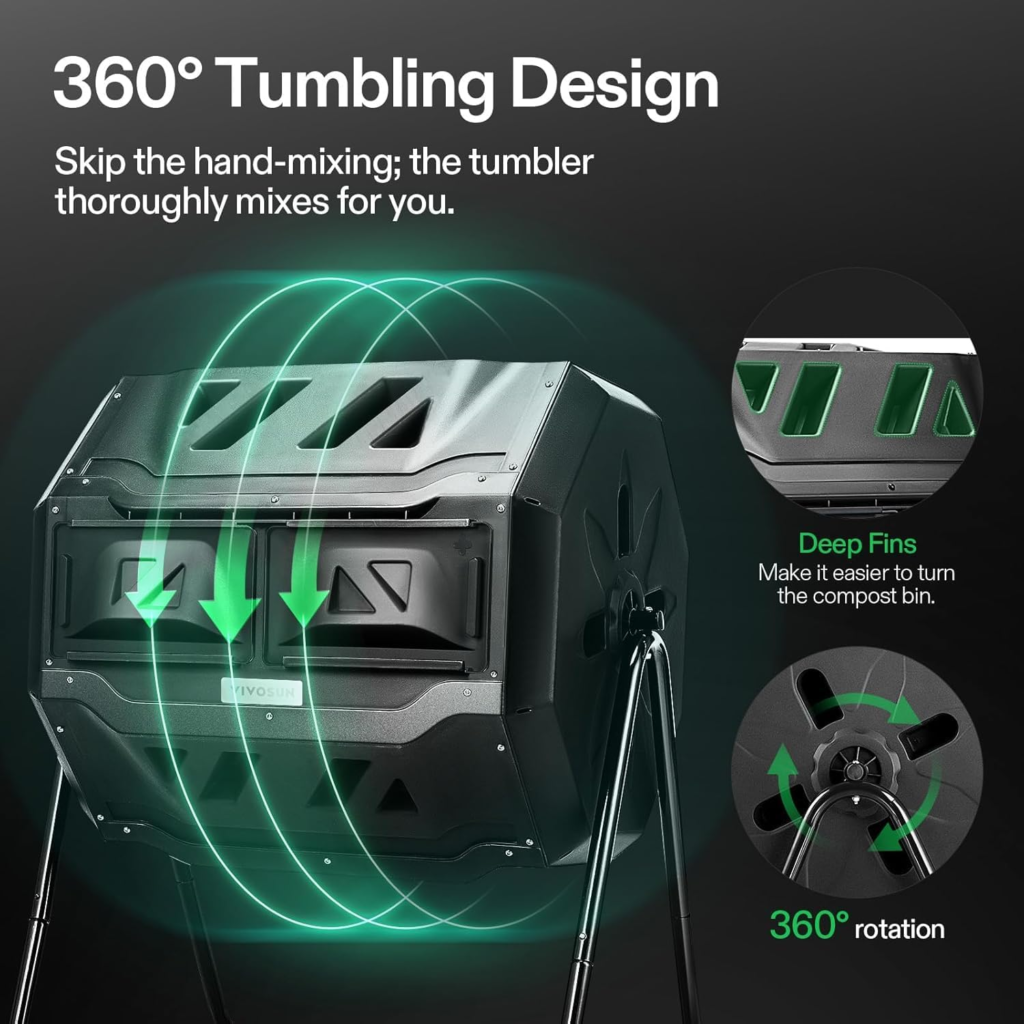
– Tumbling aeration — spinning the drum 3–5 times every 2 days provides the oxygen decomposition needs without manual fork-turning
– Dual chambers — fill one side while the other cures, so you always have compost in progress
– Elevated design — keeps contents off the ground where moisture collects and drainage is poor
– Ventilation ports — prevent anaerobic conditions that cause the smell most people associate with composting
👉 Click the compost tumbler you’re reading about to check current pricing and capacity on Amazon
Tumbler vs. Open Pile vs. Worm Bin: Choosing Your Composting Method
Each composting method suits different situations:
– Tumbler: best for suburban homes with moderate food waste, pest problems, and limited patience — fastest results, lowest maintenance
– Open pile: cheapest, handles the largest volume, but slowest and attracts pests — best for large rural properties
– Worm bin (vermicomposting): best for apartments or indoor use — small batch, high-quality castings, but limited capacity
– Bokashi: fermentation-based, handles meat and dairy that other methods can’t — requires burying the fermented material afterward
If you’re connecting your kitchen waste stream to your garden through composting, the meal prep planning guide covers how to reduce food waste at the source — less waste means less to compost and lower grocery costs.
Before vs. After the Compost Tumbler
Before:
– Open compost pile attracted raccoons and neighborhood cats weekly
– Pile smelled bad enough that neighbors mentioned it — anaerobic decomposition from poor aeration
– Compost took 6–8 months to break down and was inconsistent quality
– Turning the pile with a fork was a sweaty, unpleasant 20-minute chore every week
After:
– Zero pest issues — sealed drum is impenetrable to animals
– No odor when the carbon-to-nitrogen ratio is maintained — tumbler aeration prevents anaerobic smell
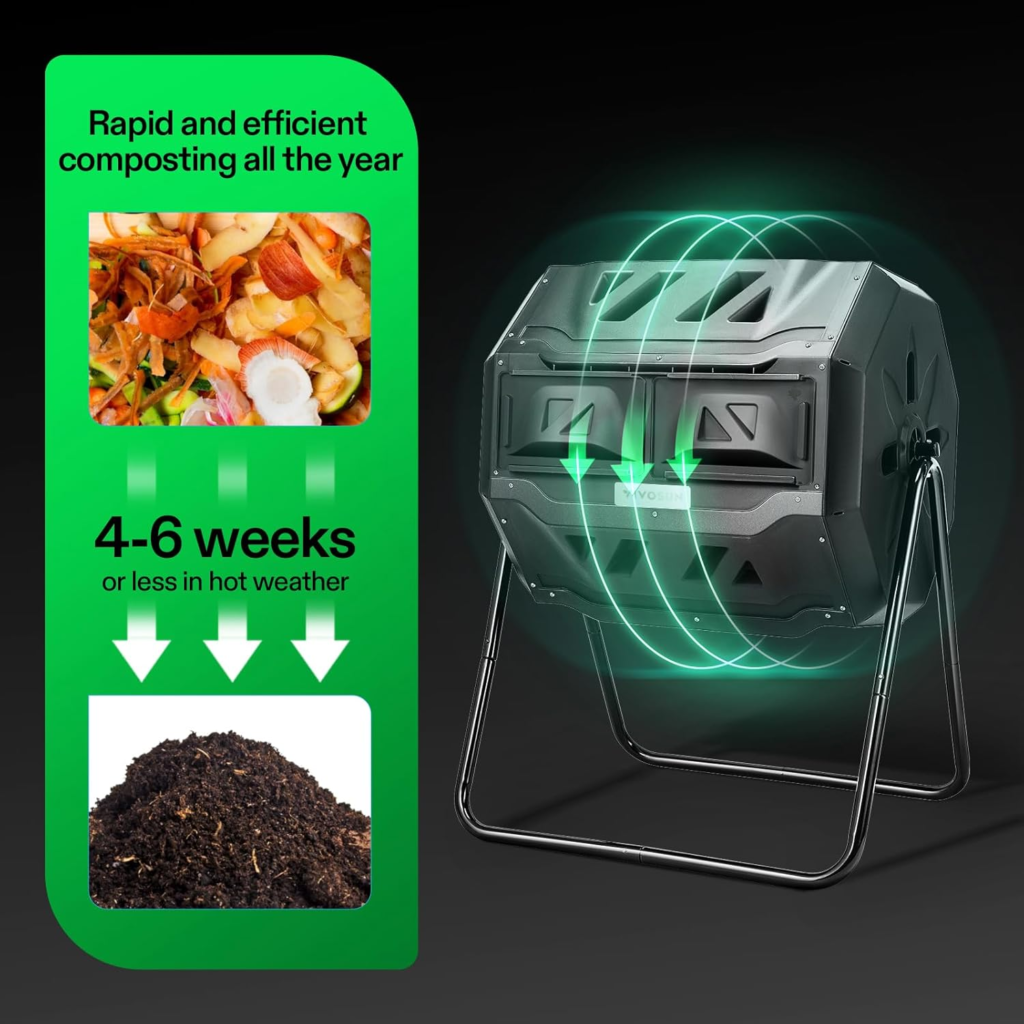
– Usable compost in 3–4 weeks during spring and summer — dramatically faster cycle
– Tumbling takes 30 seconds every other day — replaced 20 minutes of fork-turning
5 Tips for Fast, Quality Compost From a Tumbler
– Maintain a 3:1 ratio of brown to green material — three parts dry leaves, cardboard, or paper to one part food scraps keeps moisture balanced and prevents smell.
– Chop or break up large scraps before adding — smaller pieces decompose faster because microbes have more surface area to work on.
– Tumble 3–5 full rotations every 2 days — consistent aeration is the single biggest factor in speed.
– Don’t add meat, dairy, or oily foods — tumblers can’t reach temperatures high enough to safely break these down without attracting pests.
– Start one chamber fully before adding to the second — a full chamber generates more heat and decomposes faster than a half-full one that you keep adding to.
For a kitchen herb garden that benefits from homemade compost, the windowsill herb garden guide explains how compost tea from a tumbler provides nutrients that outperform store-bought fertilizer for potted herbs.
Q&A: Compost Tumbler Questions People Search For
Q: Does a compost tumbler smell?
Not if maintained properly. Smell comes from anaerobic (oxygen-deprived) conditions. Regular tumbling provides aeration, and maintaining the brown-to-green ratio keeps moisture in check. An overloaded, under-tumbled bin will smell — a properly managed one won’t.
Q: Can I compost in winter?
Decomposition slows significantly below 40°F and stops near freezing. You can continue adding material through winter — it will begin breaking down when temperatures rise in spring. Black tumblers absorb more solar heat and extend the composting season.
Q: How do I know when compost is ready?
Finished compost is dark brown, crumbly, and smells like earth — not food scraps. You shouldn’t be able to identify individual items. If you can still see banana peels or eggshells, it needs more time or tumbling.
Q: What size tumbler do I need?
A 35–45 gallon dual-chamber tumbler handles the food waste of a 2–4 person household with moderate cooking. Larger families or heavy gardeners may need a 55+ gallon model. Undersizing means the tumbler fills before the first batch finishes.
Final Take
A compost tumbler is the difference between composting as a frustrating chore and composting as a 30-second routine that actually produces results. Sealed, elevated, pest-proof, and fast — it’s the composting method that works for people who gave up on open piles.
Scraps in. Spin it. Soil out in three weeks.
Dual chambers. No pests. Compost that actually happens.
Affiliate disclosure: This article may contain affiliate links. If you purchase through them, KitchenStarterGuide.com may earn a small commission at no additional cost to you.