I used to mince herbs with a knife and cutting board like a normal person. Chop, gather, chop again, gather again, repeat until the parsley was something close to fine. It took 3–4 minutes per herb and scattered green bits across the counter every time.
Multi-blade herb scissors do the same job in one pass. Five parallel blades cut simultaneously, turning a sprig of cilantro into a fine mince in about two seconds. I felt ridiculous buying a $12 gadget for something a knife can do — until I used them once and realized I’d been wasting time for years.
The 5-Blade Scissors Built for Fast, Even Herb Cutting
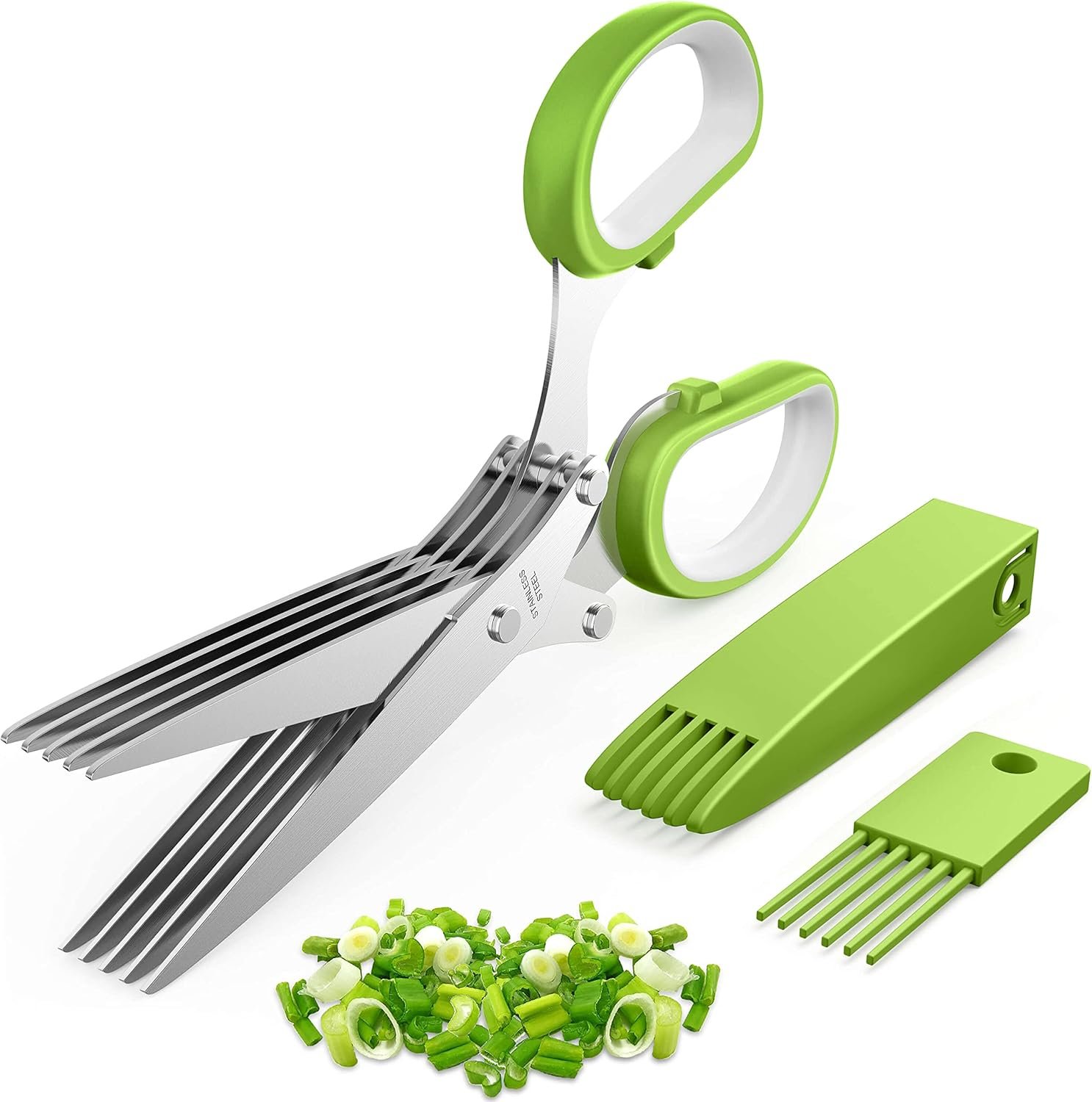
This is one of Amazon’s top-rated multi-blade herb scissors in the $8–$15 range — featuring five stainless steel blades, ergonomic handles, and an included cleaning comb for removing herb residue from between blades.
What makes herb scissors worth the drawer space:
– Five parallel blades — one snip equals five cuts, turning whole leaves into fine mince instantly
– Stainless steel construction — stays sharp through hundreds of uses and won’t rust from herb moisture
– Included cleaning comb — the biggest complaint about multi-blade scissors is herb bits stuck between blades, and the comb solves it
– Ergonomic grip handles — comfortable for the repetitive snipping motion, even during large-batch prep
– Works directly over the pot or plate — no cutting board needed, no transfer, no scattered herb bits
Herb Scissors vs. Knife vs. Mezzaluna: Which Herb Tool Works Best
Each herb cutting method has its place depending on volume and precision:
– Chef’s knife: most versatile, best for large volumes, requires a cutting board and some knife skill
– Herb scissors: fastest for small to medium quantities, no board needed, cuts directly into a bowl or over a plate
– Mezzaluna (rocking blade): good for medium volumes on a round board, but takes up more storage space
– For daily cooking where you’re adding a handful of herbs to a dish, scissors are the fastest option with the least cleanup
If you’re building out a set of kitchen tools that handle daily cooking efficiently, the essential kitchen tools for beginners guide covers the core items that complement herb scissors — including which knife you actually need and which gadgets are redundant.
Before vs. After Multi-Blade Herb Scissors
Before:
– Herbs minced with a knife on a cutting board — messy, slow, and inconsistent results
– Skipped fresh herbs when cooking felt rushed because the prep time wasn’t worth it
– Dried herbs used as a default because fresh required too much effort for weeknight meals
– Cutting board, knife, and counter all needed cleaning after herb prep
After:
– Fresh herbs added to nearly every dinner — the time cost dropped to seconds
– Snip directly over the dish or bowl — no cutting board, no transfer, no mess
– Consistent mince size every time — no more unevenly chopped basil leaves
– Cleaning comb makes post-use cleanup genuinely quick instead of picking bits from between blades

5 Tips for Getting the Most From Herb Scissors
– Hold the herbs in a small bunch and snip across the bunch — cutting one leaf at a time defeats the purpose of multi-blade design.
– Snip directly over the pot, pan, or serving plate — eliminating the cutting board is half the value of these scissors.
– Use the cleaning comb immediately after use while herbs are still moist — dried herb bits cement between the blades and require soaking.
– Dry the blades after washing — five blades means five surfaces where water can sit and cause discoloration over time.
– These work best on soft herbs like cilantro, parsley, chives, basil, and dill — woody herbs like rosemary and thyme are better stripped from stems and minced with a knife.
For growing your own supply of herbs to cut, the kitchen herb garden starter guide explains which herbs grow best indoors and how to keep a rotating supply of fresh basil, cilantro, and parsley on your windowsill year-round.
Q&A: Herb Scissors Questions People Search For
Q: Are herb scissors actually faster than a knife?
For small quantities (a handful of cilantro, a few basil leaves), significantly faster. For large-batch prep like pesto or chimichurri, a knife or food processor is more efficient. Herb scissors excel at the daily handful-of-herbs use case.
Q: Can I sharpen multi-blade herb scissors?
Most can’t be sharpened at home because the blades are too close together for standard sharpeners. Quality stainless steel blades stay sharp for years of normal use. When they dull, replacement is more practical than sharpening.
Q: Are they dishwasher safe?
Most are technically dishwasher safe, but hand washing preserves the blade edge longer. If using the dishwasher, place them in the utensil basket with blades facing down and dry immediately after the cycle.
Q: What herbs don’t work well with scissors?
Woody herbs like rosemary, thyme stems, and sage are too tough and fibrous for clean scissor cuts. These are better stripped from stems and minced with a knife. Herb scissors are designed for soft, leafy herbs.
Final Take
Multi-blade herb scissors are a $12 tool that removes the one reason most people skip fresh herbs on weeknights: prep time. One snip replaces five knife cuts, no cutting board needed, and the cleaning comb means they’re maintained in under 10 seconds.
Five blades. One cut. Fresh herbs every night.
Snip it. Serve it. Flavor added in seconds.
Affiliate disclosure: This article may contain affiliate links. If you purchase through them, KitchenStarterGuide.com may earn a small commission at no additional cost to you.