I spent two years avoiding bread recipes. Not because I don’t love bread — I absolutely do — but because kneading dough by hand is genuinely exhausting, and I kept messing it up.
A stand mixer fixed that. In the first week, I made homemade pizza dough, a batch of cookies, and whipped cream for the first time in my life. All effortlessly.
The Beginner-Friendly Stand Mixer That Does the Heavy Work
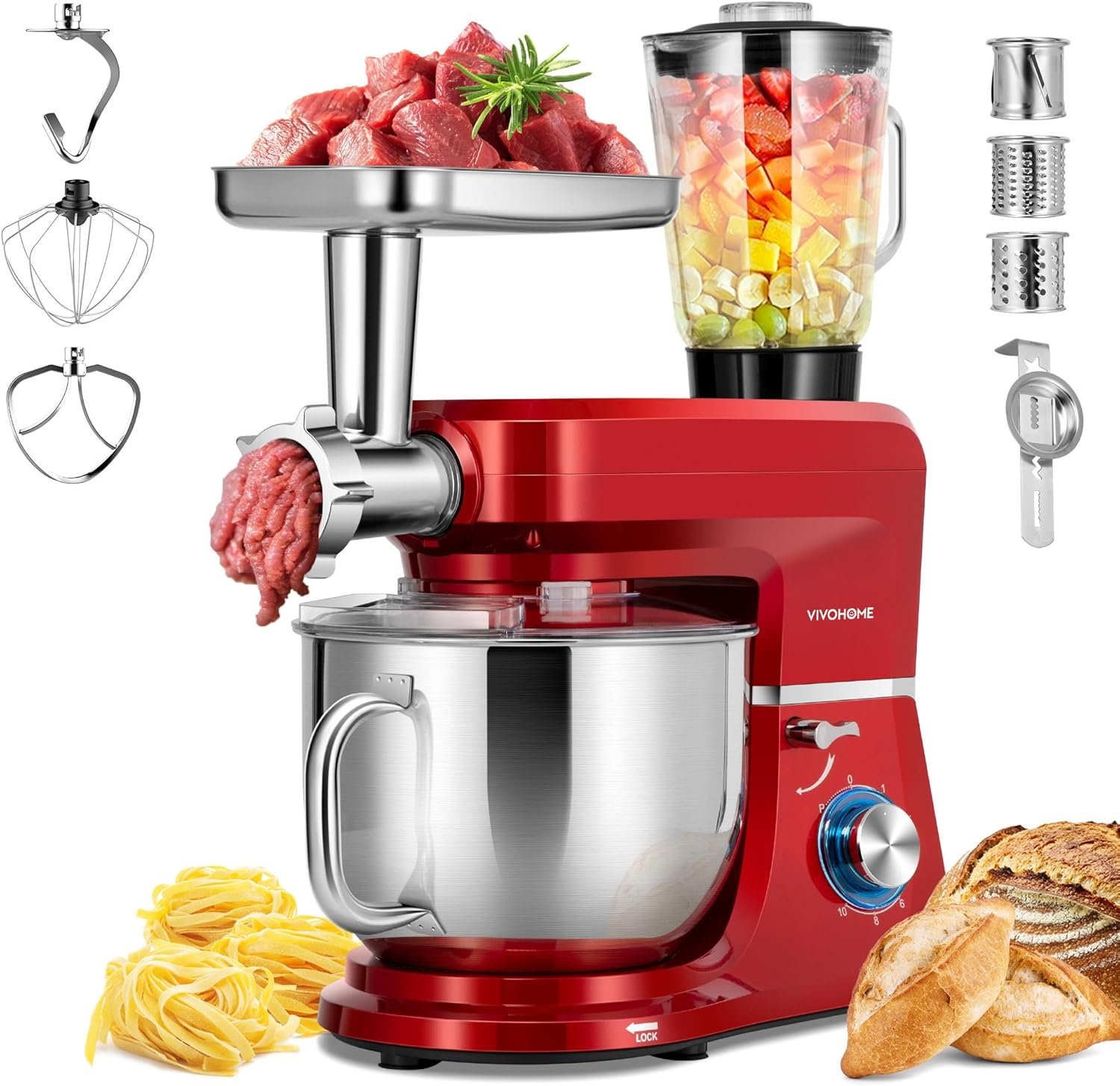
This is one of Amazon’s top-rated entry-level stand mixers in the $150–$250 range — built for home bakers who want professional-quality results without professional complexity.
What sets it apart for beginners:
- Tilt-head design for easy bowl access
- Multiple speed settings from slow fold to high whip
- Includes dough hook, flat beater, and wire whisk
- Includes meat grinder AND blender attachments
- Splash guard to keep counters clean
- Compact footprint compared to full-size models
- Double the size of a standard Kitchen aid
What You Can Actually Make With It
This isn’t a gadget that collects dust. It earns counter space with everyday use:
- Bread and pizza dough — hands-free kneading in 8–10 minutes
- Cookie and cake batters — no more tired arms mid-recipe
- Whipped cream and meringue — done in under 3 minutes
- Meatball and burger mix — consistent texture every time
- Pasta dough — silky smooth without a workout
If you’re still building out your kitchen, the guide to best beginner kitchen tools for cooking shows which tools to prioritize first.
Before vs. After Owning a Stand Mixer
Before:
- Avoided any recipe that required kneading
- Inconsistent cookie dough — overmixed or undermixed
- Hand cramps after 5 minutes of mixing
- Whipped cream always turned out lumpy
After:
- Bread every weekend without dreading the process
- Perfectly mixed batters, every time
- Freed hands to prep other ingredients while it runs
- Fluffy whipped cream in under 3 minutes
Tips for Getting Started With Your Stand Mixer
- Always start at the lowest speed setting to avoid flour clouds.
- Don’t exceed the bowl capacity — overfilling causes uneven mixing.
- Use the dough hook for dense mixtures and the whisk for light, airy ones.
- Clean attachments immediately after use — dried dough is a nightmare to remove.
- Let the machine do the work — stop fighting with it and step back.
Once you’re comfortable with basics, the simple meal prep ideas for beginners guide will help you put your new skills to weekly use.
Q&A: Stand Mixer Questions Beginners Ask
Q: Is a stand mixer really necessary?
For occasional baking, no. But if you bake more than twice a month, the time and effort savings pay for themselves quickly.
Q: Can I use it for savory cooking?
Absolutely — mashed potatoes, shredded chicken, meat mixtures all benefit from a stand mixer.
Q: How noisy is it?
At low speeds, it’s quiet enough to hold a conversation next to. Higher speeds are louder but finish fast.
Q: Is $150–250 reasonable for a starter model?
Yes — this range offers genuine quality without the premium price of commercial-grade models.
Final Take
The best stand mixer for beginners doesn’t need to be complicated — it just needs to reliably do the work you don’t want to do by hand.
This model unlocked recipes I’d avoided for years. If you’re serious about cooking at home, it’s one of the highest-impact investments your kitchen can make.
Less effort. Better results. More recipes.Affiliate disclosure: This article may contain affiliate links. If you purchase through them, KitchenStarterGuide.com may earn a small com