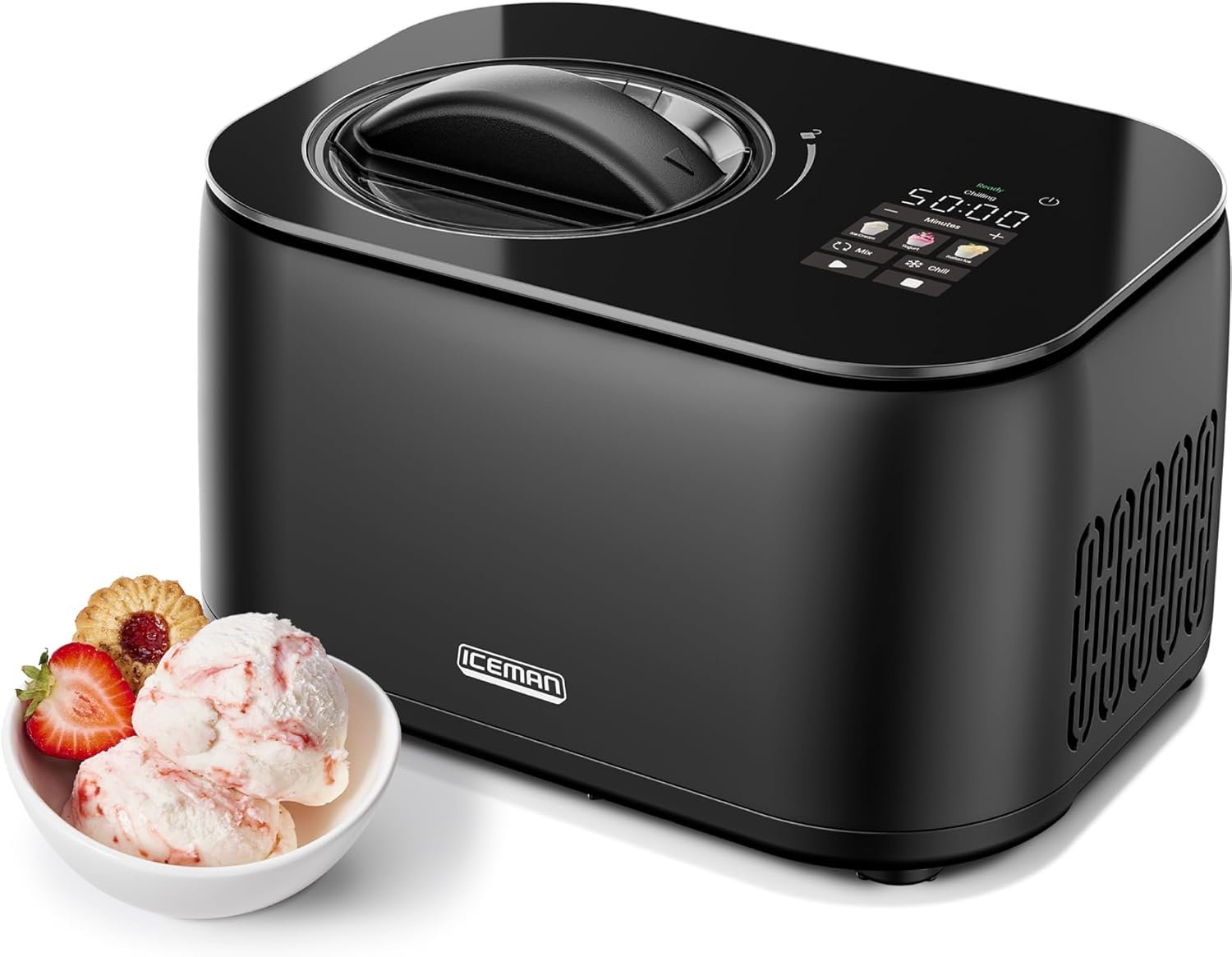
I owned a bowl-freeze ice cream maker for three years. To use it, I needed 24 hours of advance planning to pre-freeze the bowl, which meant homemade ice cream required remembering to freeze the bowl the day before, which meant it basically never happened.
A compressor ice cream maker eliminated the planning entirely. Decide you want ice cream at 7pm, have it ready by 7:40pm. No pre-freezing, no bowl taking up freezer space, unlimited back-to-back batches. I now make ice cream weekly.
The Self-Freezing Ice Cream Maker That Works Without Pre-Frozen Bowls
This is one of Amazon’s top-rated compressor ice cream makers in the $150–$250 range — featuring a built-in compressor that chills the bowl independently, 1–1.5 quart capacity, 20–30 minute churn time, and the ability to run consecutive batches without waiting.
What separates a compressor model from a bowl-freeze model:
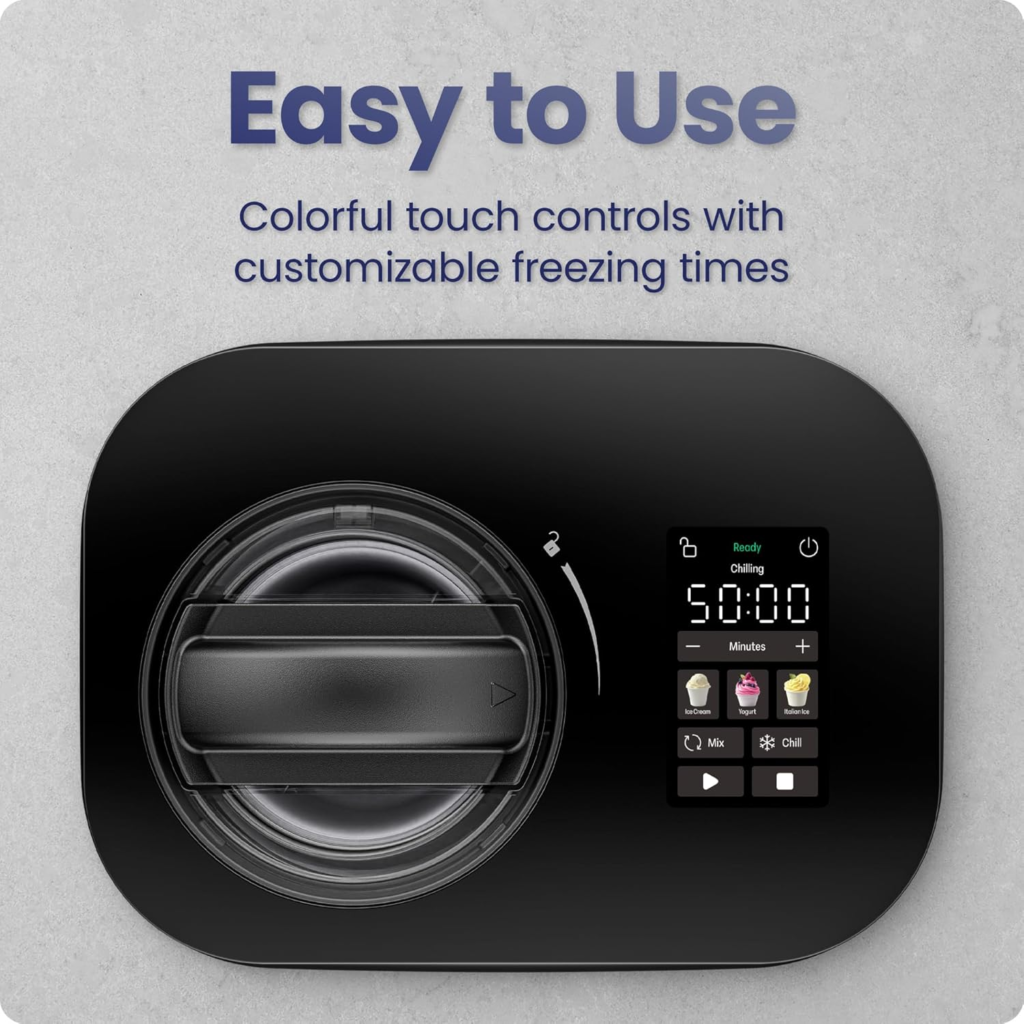
- No pre-freezing required: the built-in compressor chills from room temperature — ready to use anytime
- Unlimited consecutive batches: bowl resets between batches without the 24-hour refreeze wait
- Consistent chilling: compressor maintains exact temperature throughout the churn — no warm spots as the frozen bowl mass transfers heat
- Sorbet and gelato capable: lower temperatures allow different texture profiles than bowl-freeze models can achieve
- Built-in keep-cool function: holds finished ice cream at serving temperature after churning
👉 Click the compressor ice cream maker you’re reading about to check current pricing and capacity on Amazon (ON SALE at the time of this writing!)
The Science of Good Ice Cream: Why Churn Speed and Temperature Matter
Ice cream texture depends entirely on ice crystal size, which is controlled by churn rate and temperature:
- Faster churn = smaller ice crystals = creamier texture. Slow or inconsistent churning produces icy, coarse texture.
- Colder churn temperature = faster freeze = smaller crystals. Bowl-freeze models lose cold mass during churning; compressors maintain consistent temperature.
- High fat content (cream vs. milk) produces creamier texture regardless of equipment — fat interferes with crystal formation
- Overrun (air incorporation) affects lightness — commercial ice cream is 50% air; home machines produce denser, richer results
Ice cream making pairs naturally with other dessert and baking projects. The best stand mixer for beginners guide covers whipping cream and making mix-ins that elevate homemade ice cream beyond simple base flavors.
Before vs. After Switching to a Compressor Model
Before (bowl-freeze model):
- Ice cream required 24-hour advance planning to pre-freeze the bowl — rarely happened spontaneously
- Only one batch possible per session before the bowl needed to refreeze
- Bowl occupying significant freezer space permanently
After (compressor model):
- Ice cream decision to finished product in 25 minutes, any time
- Multiple flavor batches back-to-back for parties or meal prep
- Freezer freed from the dedicated ice cream bowl footprint
- Sorbet and frozen yogurt added to the rotation alongside traditional ice cream
Simple Vanilla Bean Ice Cream Recipe
- Base: 1 cup whole milk, 2 cups heavy cream, 3/4 cup sugar, 1/4 tsp salt, 1 tsp vanilla extract or 1 split vanilla bean scraped.
- Dissolve sugar in milk by stirring until clear — no heat required. Add cream, salt, and vanilla. Stir to combine.
- Chill base in refrigerator for 30 minutes minimum (1 hour preferred) for better texture.
- Pour into running compressor machine. Churn 20–25 minutes until thick and creamy.
- For firmer texture: transfer to a container and freeze an additional 2 hours. For soft-serve texture: serve directly from the machine.
For complete dessert-making capability alongside ice cream, the best waffle maker nonstick guide covers the perfect pairing — fresh waffles with homemade ice cream is a dessert combination that outperforms any restaurant version at a fraction of the cost.
Q&A: Ice Cream Maker Questions Dessert Lovers Ask
Q: Is a compressor ice cream maker worth the higher price?
If you’ll use it spontaneously, yes. The bowl-freeze model requires planning that prevents casual use — many people stop using them. Compressor models have zero friction to use, which means you actually use them. Payback time depends entirely on frequency of use.
Q: Can it make sorbet and frozen yogurt?
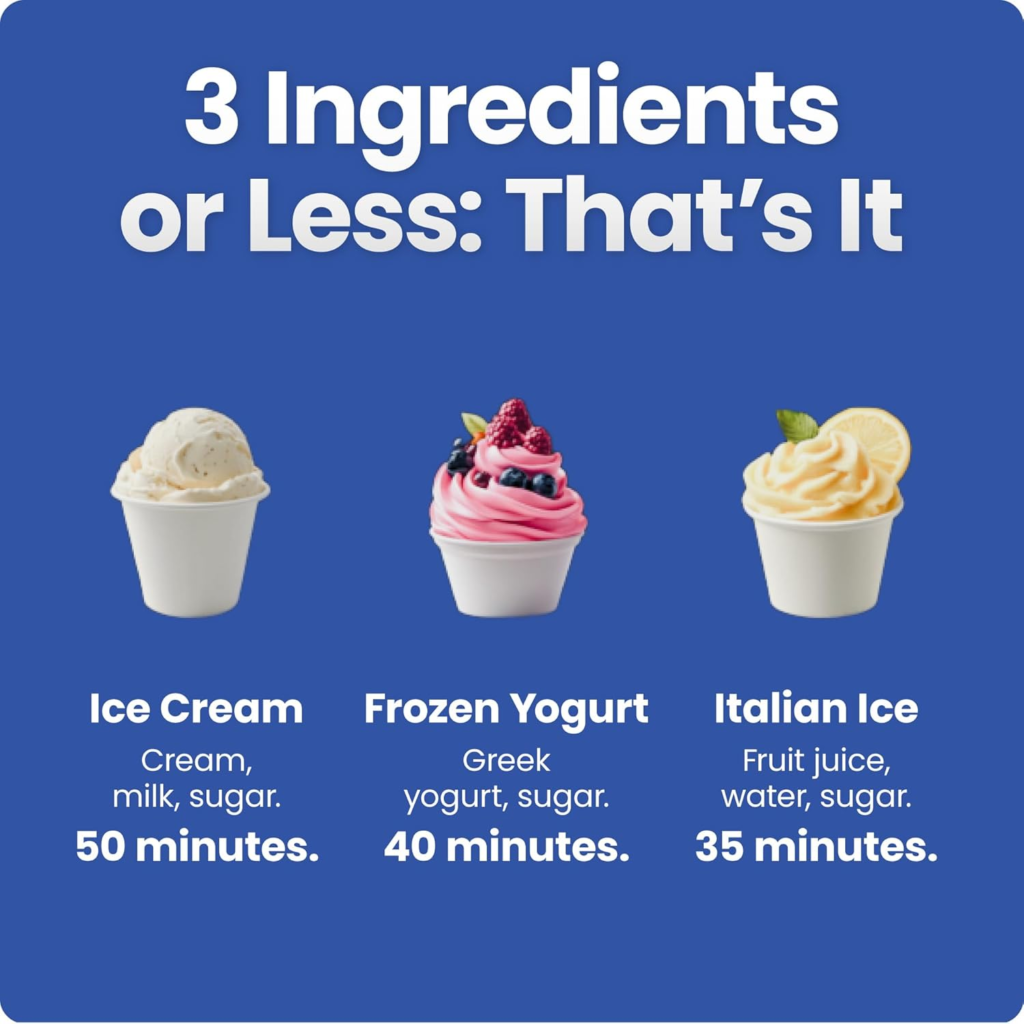
Yes — compressor models handle any churned frozen dessert. Sorbet (fruit + sugar + water) typically requires colder temperatures than ice cream, which compressors provide consistently. Frozen yogurt, gelato, and sherbet all work with appropriate recipes.
Q: How much counter space does a compressor model take?
Compressor models are larger than bowl-freeze units due to the internal compressor. Expect a footprint similar to a standard coffee maker but taller. Most models are 12–15 inches wide, 8–10 inches deep, and 10–12 inches tall.
Q: What is the ideal fat content for creamy ice cream?
Heavy cream (36% fat) produces the creamiest results. A mix of half cream, half whole milk is standard for most recipes. Reducing fat content below 10% total produces noticeably icier texture regardless of machine quality.
Final Take
An ice cream maker removes the only real barrier to homemade ice cream: planning. Bowl-freeze models require it; compressor models don’t. That difference in friction separates a machine you use occasionally from one that becomes a weekly kitchen staple.
Decide. Pour. Churn. Eat in 30 minutes.
No pre-freeze. No waiting. Just ice cream when you want it.
Affiliate disclosure: This article may contain affiliate links. If you purchase through them, KitchenStarterGuide.com may earn a small commission at no additional cost to you.