Gluten-free bread from the grocery store is expensive, dry, and crumbles when you try to spread anything on it. I bought three different brands before concluding that commercial GF bread is structurally inferior to real bread and probably always will be.
A bread maker with a dedicated gluten-free cycle changed that. First loaf out of the machine was moist, sliceable, and actually tasted like bread. The cost per loaf dropped from $8 to under $2, and the texture was consistently better than anything shelf-stable.
The Automatic Bread Maker Built for Consistent Home Loaves
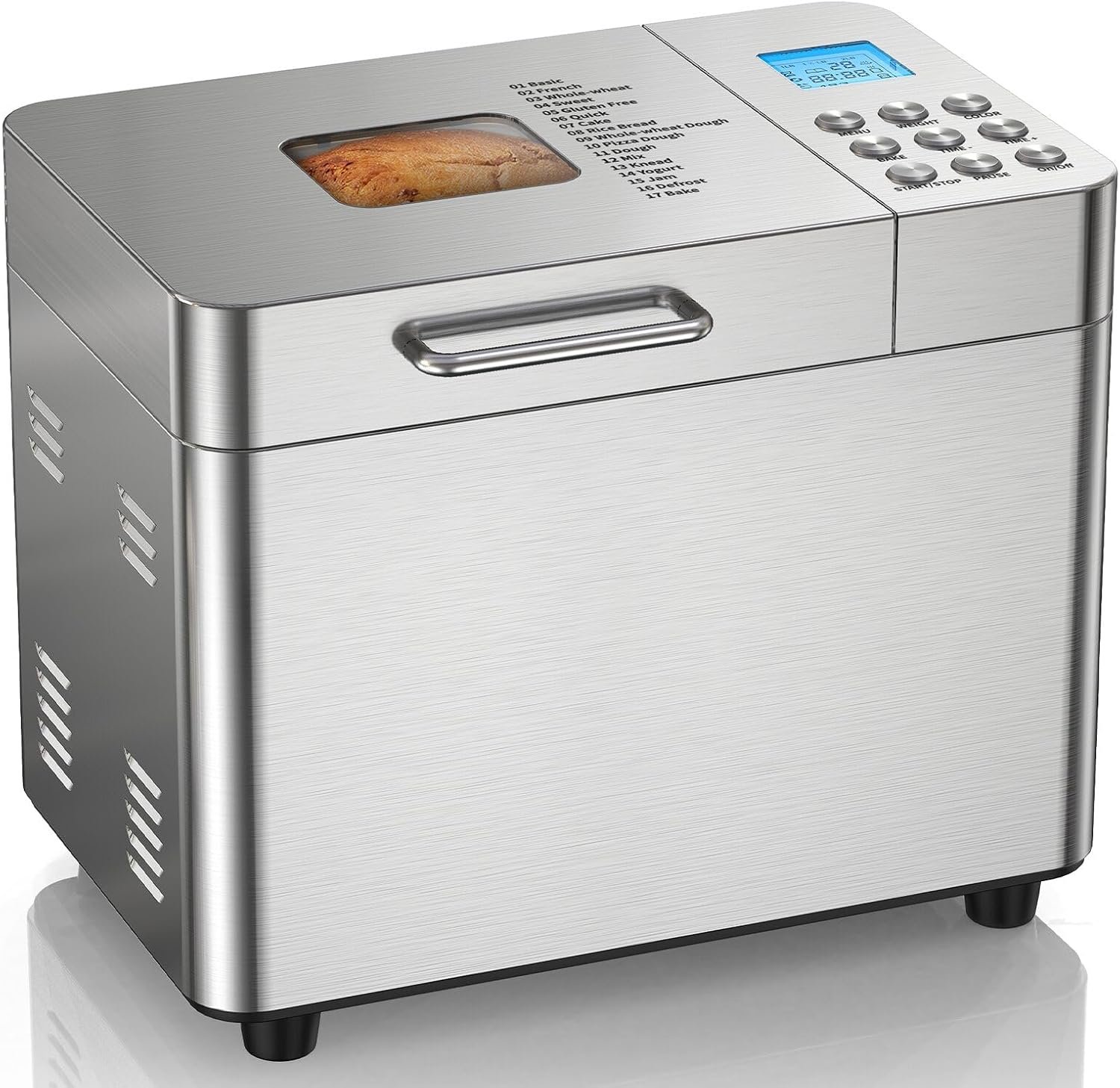
This is one of Amazon’s top-rated bread makers in the $70–$150 range — featuring multiple baking programs including gluten-free, whole wheat, and rapid cycles, a removable non-stick pan, and programmable delay timer for fresh bread on a schedule.
What makes a quality bread maker worth buying:
- Dedicated gluten-free cycle: GF dough requires different kneading and rising parameters than wheat dough — a machine without this cycle produces poor results
- 1.5–2 lb loaf capacity: standard sandwich loaf size that fits normal bread bags and containers
- Programmable delay timer: load ingredients the night before, wake up to fresh bread
- Viewing window: monitor rise without opening the lid and losing heat
- Keep-warm function: maintains loaf temperature after baking cycle completes
Bread Maker vs. Oven Baking: Why the Machine Wins for Beginners
Hand-baked bread is rewarding but variable. A bread maker removes the skill ceiling:
- Consistent kneading: the machine applies the same technique every time — human kneading varies significantly
- Controlled rise environment: the machine maintains optimal temperature during proofing — kitchen temperature swings cause inconsistent results
- No timing management: set it and walk away — no monitoring rise times or oven preheating
- Failure rate near zero: once you have a working recipe, results are reproducible every single time
For more on building a complete beginner kitchen toolkit where a bread maker fits alongside other fundamentals, the guide to meal prep and food storage for beginners covers how batch baking and storage extend fresh bread across the whole week.
Before vs. After Getting a Bread Maker
Before:
- Paying $7–$9 per gluten-free loaf with poor texture and fast staleness
- Oven bread attempts with inconsistent rise and dense crumb due to beginner kneading
- Avoiding toast and sandwiches because commercial GF bread couldn’t hold together
After:
- Loaves baked on a schedule — machine starts at 5am, fresh bread ready with breakfast
- Cost under $2 per loaf using bulk GF flour blend
- Texture consistent enough for sandwiches, toast, and French toast without crumbling
- Expanded beyond GF — whole wheat, cinnamon raisin, and pizza dough all work in the same machine
Basic Gluten-Free Bread Recipe for Bread Makers
- Add wet ingredients first: 1 cup warm water, 2 eggs, 3 tbsp olive oil, 1 tsp apple cider vinegar.
- Add dry ingredients: 2.5 cups GF all-purpose flour blend (with xanthan gum), 1.5 tsp instant yeast, 1 tbsp sugar, 1 tsp salt.
- Select the gluten-free program. Do not use rapid or standard cycles — GF dough needs different timing.
- Use a spatula to scrape down sides after the first minute of mixing if flour is sticking to corners.
- Allow to cool completely before slicing — GF bread slices poorly when warm due to its moisture content.
For the right tools to slice and store homemade bread properly, the best kitchen knives for beginners guide covers bread knife selection specifically and why serrated edges matter for clean GF loaf slicing.
Q&A: Bread Maker Questions Home Bakers Ask
Q: Can I make regular (gluten) bread in a bread maker too?
Yes — bread makers handle standard white, whole wheat, multigrain, and enriched doughs well. The gluten-free cycle is a bonus feature; the machine functions perfectly as a conventional bread maker for all other doughs.
Q: How much does it cost per loaf to make bread at home?
Roughly $1.50–$3 per loaf depending on flour and add-ins. Gluten-free flour is more expensive than wheat, but still significantly cheaper than commercial GF bread. Standard wheat bread can cost under $1 per loaf using bulk flour.
Q: Can I use bread machine yeast vs. regular yeast?
Bread machine yeast (also called instant or rapid-rise yeast) is formulated for no-proofing use and gives more consistent results in machines. Regular active dry yeast works but benefits from proofing in warm water first. Either works — instant yeast is more foolproof.
Q: Why did my bread collapse in the middle?
The most common cause is too much liquid or yeast. GF dough especially is sensitive — reduce liquid by 2 tbsp and try again. Humidity affects flour absorption, so recipes may need minor seasonal adjustments.
Final Take
A bread maker is one of the few kitchen appliances that delivers consistent, professional-quality results from the first use. For anyone managing dietary restrictions, baking on a budget, or simply wanting fresh bread without skill or effort, it earns its counter space quickly.
Load it. Set the timer. Wake up to fresh bread.
No kneading. No guessing. Consistent loaf every time.
Affiliate disclosure: This article may contain affiliate links. If you purchase through them, KitchenStarterGuide.com may earn a small commission at no additional cost to you.