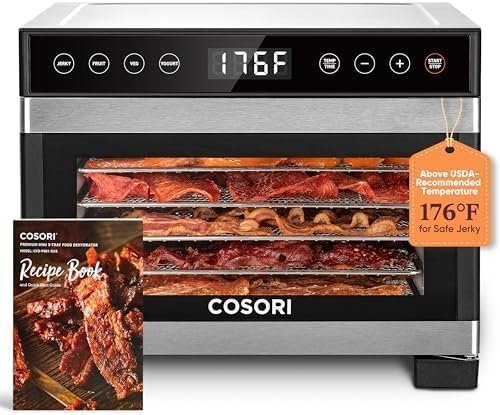
Store-bought beef jerky costs somewhere between “surprisingly expensive” and “is this dried beef or is it gold leaf” per ounce. I bought it anyway because homemade jerky felt like a project — marinating overnight, fussing with the oven, watching it for hours.
A food dehydrator removed all of that friction. Load the trays, set the temperature, come back in 6 hours. The jerky that came out was better than anything I’d bought — thicker, more flavorful, zero preservatives, and cost roughly 40 cents per ounce instead of $2.
The Food Dehydrator Built for Consistent, Hands-Off Jerky
This is one of Amazon’s top-rated food dehydrators in the $50–$100 range — featuring a rear-mounted horizontal airflow fan, digital temperature control from 95°F to 165°F, and multiple stackable trays for batch production.
What makes a dehydrator genuinely good for jerky:
- Horizontal rear fan forces uniform airflow across every tray — no rotating required
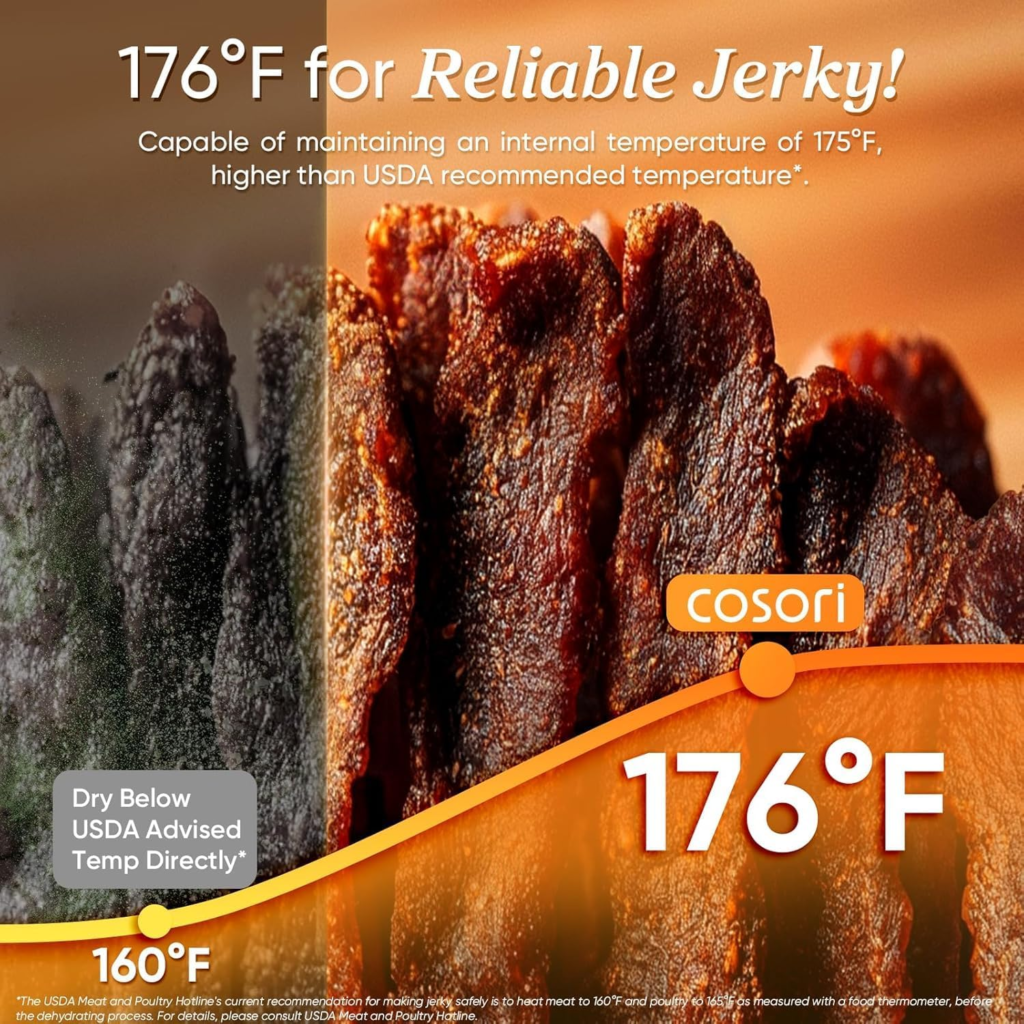
- Temperature range reaching 155–165°F safely dries beef, poultry, and pork per food safety guidelines
- Digital thermostat holds temperature accurately — prevents over or under-drying
- 6+ square feet of drying space handles 2–3 pounds of raw beef per batch
- Timer with auto-shutoff lets you set it and forget it overnight
👉 Click the dehydrator you’re reading about to check current pricing and tray capacity on Amazon
Horizontal vs. Vertical Airflow: Why It Matters for Jerky
The biggest quality difference between dehydrators is airflow direction:
- Vertical (bottom or top fan): air must travel up through multiple trays — bottom trays dry faster, top trays lag behind. Requires rotating trays every 2 hours.
- Horizontal (rear fan): air flows evenly across every tray simultaneously — no rotation needed, no babysitting required
- For jerky specifically: uneven drying creates pieces that are overdried on one end and underdried (food safety risk) on the other
- Budget vertical dehydrators work — just plan to swap tray positions halfway through
Homemade jerky pairs naturally with learning how to select and work with quality cuts of meat. The guide to kitchen knives for beginners covers how to slice beef against the grain for optimal jerky texture before it goes in the dehydrator.
Before vs. After Getting a Dehydrator
Before:
- Spending $12–$18 on small bags of commercial jerky full of sodium and preservatives
- Occasional oven-jerky attempts that required 4 hours of attention and inconsistent results
- Jerky as an occasional treat rather than a regular snack due to cost
After:
- 2–3 lb batch every two weeks — 6 hours of unattended drying time
- Cost per ounce drops to roughly 35–45 cents vs. $1.50–$2.50 commercial
- Complete control over ingredients: no sugar, low sodium, custom marinades
- Expanded beyond beef — turkey jerky, salmon jerky, dried herbs, fruit leather
Simple Beef Jerky Marinade to Start With
- Slice 2 lbs lean beef (eye of round or top round) 1/4 inch thick, against the grain — freeze for 30 minutes first for cleaner cuts.
- Combine: 1/3 cup soy sauce, 2 tbsp Worcestershire, 1 tsp garlic powder, 1 tsp onion powder, 1/2 tsp black pepper, 1/4 tsp red pepper flakes.
- Marinate beef in the mixture for 6–24 hours in the refrigerator — longer marinade = deeper flavor.
- Pat dry before loading trays — excess moisture extends drying time significantly.
- Dehydrate at 160–165°F for 4–8 hours depending on thickness. Jerky is done when it bends without breaking and shows no moisture.
For more on food safety temperatures and proper handling when making jerky and other preserved foods, the food storage and meal prep guide for beginners covers safe handling practices that apply to dehydrating, fermenting, and any long-preservation food method.

Q&A: Dehydrator Questions for First-Time Jerky Makers
Q: Is homemade jerky safe? What temperature kills bacteria?
Yes — the USDA recommends 160°F for beef and 165°F for poultry jerky. Some people pre-cook meat in the oven to 160°F before dehydrating for extra safety assurance. Most quality dehydrators reach these temperatures.
Q: How long does homemade jerky last?
Properly dried jerky lasts 1–2 months at room temperature in an airtight container, up to 6 months refrigerated, and up to a year frozen. No preservatives means slightly shorter shelf life than commercial — but it rarely lasts that long anyway.
Q: What’s the best meat for jerky?
Lean cuts work best because fat goes rancid during dehydration. Top round, eye of round, flank steak, and 93%+ ground beef are all excellent. Avoid marbled cuts like ribeye.
Q: Can I dehydrate things other than jerky?
Absolutely — fruit leather, dried herbs, banana chips, apple rings, vegetable chips, and pet treats all work well. A dehydrator pays for itself quickly if you use it for multiple purposes.
Final Take
A food dehydrator is one of the best cost-per-use kitchen investments for anyone who regularly buys jerky, dried fruit, or snack foods. The payback period is short — often within 4–6 batches — and the quality of homemade product consistently outperforms commercial options.
Set it. Walk away. Come back to better jerky than you can buy.
One batch in. Grocery jerky out. No going back.
Affiliate disclosure: This article may contain affiliate links. If you purchase through them, KitchenStarterGuide.com may earn a small commission at no additional cost to you.