The first time I made fresh pasta at home I felt genuinely accomplished in a way that opening a box never delivers. The dough, the rolling, the cutting — it’s tactile and satisfying, and the result tastes like a completely different ingredient from dried pasta.
A manual pasta roller makes fresh pasta accessible to anyone. No special skills. Just flour, eggs, and 30 minutes.
The Manual Pasta Roller That Makes Fresh Pasta Simple
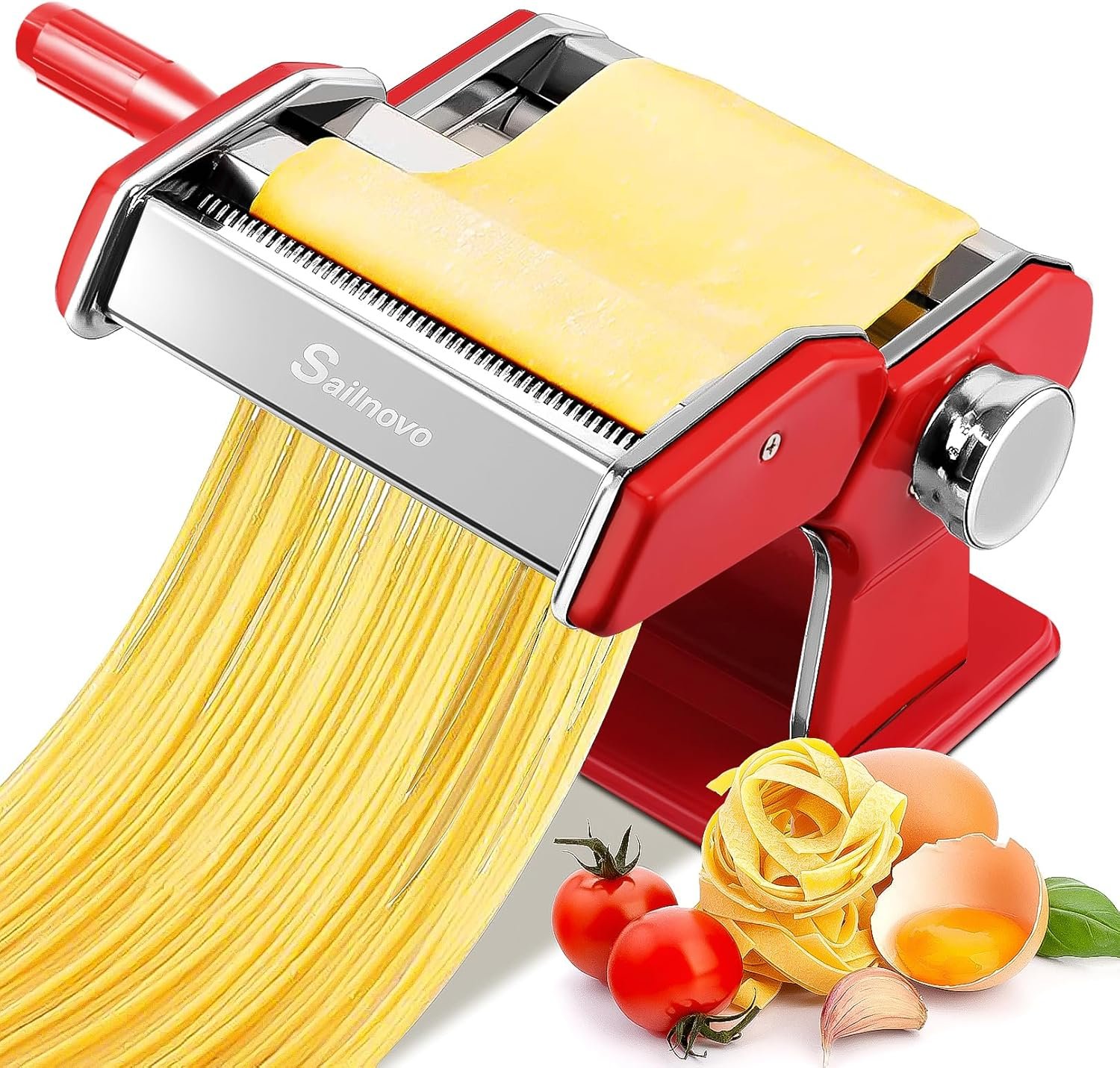
This is one of Amazon’s top-rated manual pasta makers in the $35–$70 range — featuring a stainless steel roller with multiple thickness settings, a crank handle, and included cutters for fettuccine and spaghetti.
What makes a quality manual roller stand out:
- 9 adjustable thickness settings from 3mm to paper-thin
- Stainless steel rollers that won’t rust or absorb pasta flavors
- Stable clamp-mount base for counter attachment
- Included cutter attachments for spaghetti and fettuccine
- Smooth crank operation that doesn’t require force
Fresh Pasta vs. Dried: The Difference Worth Understanding
Fresh and dried pasta aren’t the same ingredient used differently — they’re genuinely different products for different applications:
- Fresh pasta: tender, silky, cooks in 2–3 minutes — best with delicate butter, cream, or light tomato sauces
- Dried pasta: firmer, holds shape through bold sauces — better for carbonara, arrabbiata, and oil-based sauces
- Fresh pasta made at home uses only flour and egg — no additives, no preservatives
- Homemade fresh pasta can be flavored: spinach, squid ink, beet — not possible with dried
If you have a stand mixer, the best stand mixer for beginners guide on KitchenStarterGuide covers pasta dough attachments that let your mixer knead the dough automatically.
Basic Fresh Pasta Recipe to Start With
- Combine 200g 00 flour (or all-purpose) and 2 large eggs. Mix until shaggy.
- Knead 8–10 minutes until smooth and elastic — the dough should spring back when poked.
- Wrap in plastic and rest 30 minutes at room temperature — crucial for gluten relaxation.
- Divide into 4 pieces. Flatten each to fit the widest roller setting.
- Feed through settings 1 → 3 → 5 → 7, folding and rotating once at setting 3.
- Attach cutter and run sheet through for fettuccine or spaghetti. Dust with flour to prevent sticking.
Before vs. After Owning a Pasta Maker
Before:
- Limiting pasta dishes to dried shapes from the box
- Fresh pasta seemed intimidating — restaurant-only territory
- Never attempting lasagna with homemade sheets
- Missing out on flavored pasta entirely
After:
- Fresh fettuccine in 45 minutes from scratch — most of that is resting time
- Lasagna with homemade sheets on special occasions
- Spinach pasta for dinner parties that genuinely impresses guests
- Eggs and flour turned into something genuinely extraordinary
Tips for Better Fresh Pasta Every Time
- Use 00 flour if available — its fine grind produces silkier pasta than all-purpose.
- Don’t skip the 30-minute rest — rushing it produces tough, springing-back dough that won’t roll thin.
- Flour generously between passes — sticky dough tears in the roller.
- Cook immediately after cutting or dry on a rack for later — don’t let fresh pasta sit in a pile or it’ll clump.
Fresh pasta elevates simple sauces dramatically. The meat thermometer that perfects protein cooking rounds out a dinner where fresh pasta is the star with perfectly cooked protein alongside.
Q&A: Pasta Maker Questions People Ask
Q: Is manual easier or harder than a machine attachment?
Manual is slightly more effort but more tactile and satisfying. Stand mixer attachments are faster for large batches. For occasional home use, manual is perfectly practical.
Q: Can I make gluten-free pasta with it?
GF pasta dough requires different ratios and typically doesn’t roll as thin. It’s possible but less forgiving — start with traditional pasta and experiment later.
Q: How do I clean the roller?
Never wash with water — use a stiff dry brush or dry cloth only. Water causes rust and warps the rollers.
Q: How long does fresh pasta keep?
Uncooked fresh pasta keeps up to 3 days refrigerated or 3 months frozen. Dust well with flour before storing.
Final Take
A manual pasta maker is one of those kitchen tools that transforms a recipe category entirely. Fresh pasta goes from restaurant-only to a realistic Tuesday dinner once you have the equipment.
It’s simple, inexpensive, and produces results that feel genuinely impressive every time.
Fresh dough. Perfect thickness. Dinner elevated.
Affiliate disclosure: This article may contain affiliate links. If you purchase through them, KitchenStarterGuide.com may earn a small commission at no additional cost to you.