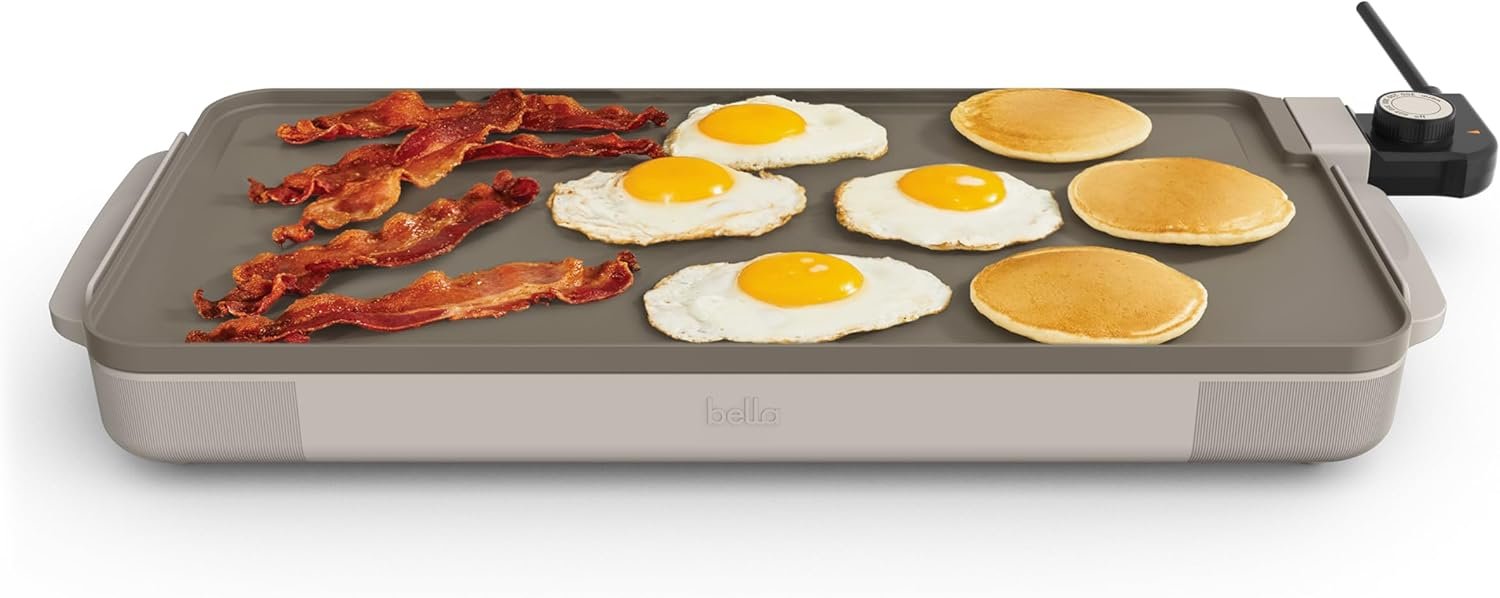
Cooking pancakes for a family of four on a 10-inch skillet is a 45-minute exercise in batch cooking and frustration. The first round is always cold by the time the last round is done.
An electric griddle serves everyone at once. Four pancakes, eight strips of bacon, a pile of eggs — all simultaneously, all hot, all to the table at the same time.
The Electric Griddle That Ends Breakfast Batch Cooking
This is one of Amazon’s top-rated electric griddles in the $40–$80 range — featuring a large non-stick cooking surface, precise temperature control, and a drip tray system for grease management.
What makes a quality electric griddle worth the counter space:
- 20″x10″ or larger cooking surface — fits 4–6 pancakes simultaneously
- Precise thermostat from 200°F to 400°F for different foods
- Removable non-stick plates or surface for dishwasher cleaning
- Sloped drip tray channels grease away from the cooking surface
- Even heat distribution — no hot spots that burn edges while centers stay raw
Why an Electric Griddle Outperforms a Stovetop Pan for Breakfast
The stovetop pan has one major limitation: size. Everything else about the electric griddle is either equal or better:
- Surface area cooks 3–4x more food simultaneously
- Consistent temperature across the entire surface — no center hot spot
- Portable — use it on the counter, table, or take it camping
- Easy cleanup — non-stick surface wipes clean or goes in the dishwasher
- Precise temperature dial prevents the guesswork of stovetop flame management
If breakfast is your main cooking focus, the guide to best non-stick pans for new cooks covers the stovetop options that complement an electric griddle for a complete breakfast setup.
What You Can Cook on an Electric Griddle
The flat surface opens up a wide range of cooking beyond just breakfast:
- Pancakes, French toast, crepes — classic breakfast staples
- Bacon, sausage, hash browns — simultaneous proteins and sides
- Grilled cheese and quesadillas — perfect even heat for even browning
- Smash burgers — the flat surface is ideal for the smash technique
- Stir-fry vegetables — the large surface prevents steaming, promotes browning
Before vs. After Adding an Electric Griddle
Before:
- 3–4 batches of pancakes = first batch cold by the time everyone ate
- Bacon and eggs requiring separate pans and constant juggling
- Weekend breakfast taking 45+ minutes from start to table
- Guests inevitably eating in shifts
After:
- Full family breakfast cooked in 15 minutes, served simultaneously
- Bacon, eggs, and pancakes all on one surface at the right temperature
- Cleanup is one surface, not multiple pans
- Weekend brunch became genuinely enjoyable to host
Temperature Guide for Common Griddle Foods
- Pancakes: 375°F — look for bubbles across the surface before flipping.
- Bacon: 325°F — low and slow renders fat without burning.
- Eggs (fried): 300°F — gentle heat prevents rubbery whites.
- Grilled cheese: 300°F — low enough to melt cheese before the bread burns.
- Smash burgers: 400°F — maximum heat for maximum crust.
For a full approach to organizing your kitchen around efficient cooking, the how to organize a small kitchen for cooking guide covers appliance placement and workflow that pairs well with a griddle setup.
Q&A: Electric Griddle Questions People Ask
Q: Do I need a griddle if I have a good skillet?
For solo cooking, not necessarily. For families or hosting, the surface area difference alone justifies it.
Q: Where do I store it?
Most models store flat — slide under a countertop appliance or vertically in a cabinet. They’re surprisingly compact when stored.
Q: Is non-stick coating safe?
Modern PTFE coatings are safe at normal cooking temperatures. Avoid preheating to maximum with nothing on the surface.
Q: Can it replace a stovetop for most cooking?
For flat-surface cooking, yes. For boiling, deep frying, or sauces, you still need the stove.
Final Take
An electric griddle is the upgrade that makes family breakfast feel effortless instead of exhausting. One surface, full meal, everyone eats together.
It’s not a specialty tool — it’s a daily driver for anyone cooking for more than two people.
One surface. Full meal. Everyone eats hot.
Affiliate disclosure: This article may contain affiliate links. If you purchase through them, KitchenStarterGuide.com may earn a small commission at no additional cost to you.