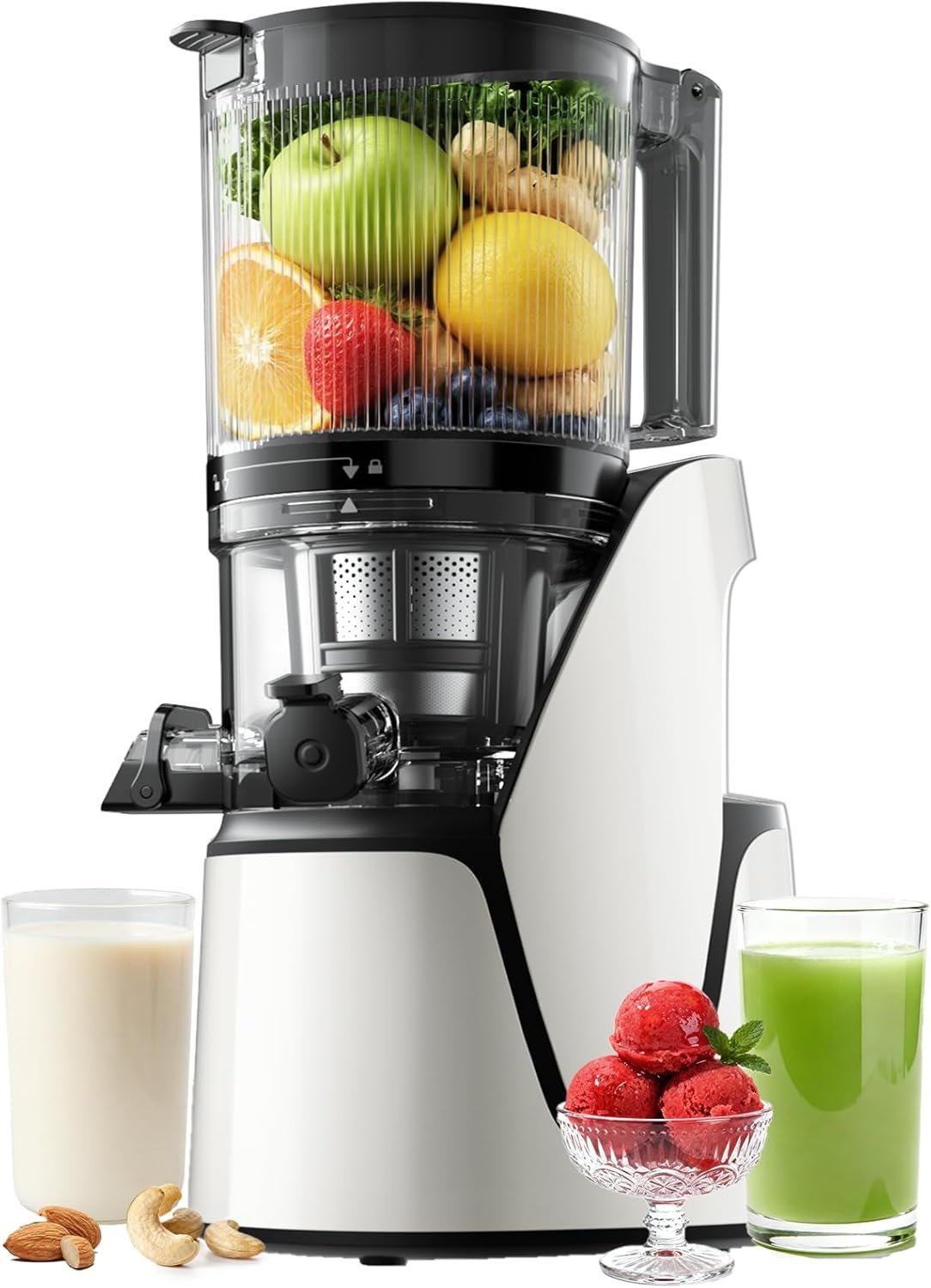
I tried three centrifugal juicers before I understood why my green juices always tasted oxidized and separated immediately in the glass. Heat and air — that’s the culprit.
A cold-press (masticating) juicer changed the quality, the yield, and honestly the flavor so dramatically that I’m still surprised when I hand one to a visitor and watch their reaction.
The Cold-Press Juicer That Delivers on Nutrient Retention
This is one of Amazon’s top-rated masticating juicers in the $100–$200 range — designed to extract juice through a slow-squeeze process rather than high-speed spinning, preserving enzymes, vitamins, and flavor.
What makes cold-press fundamentally different:
- Slow auger (40–80 RPM) generates no friction heat — enzymes survive
- Minimal oxidation means juice stays fresh for 48–72 hours
- Higher yield from leafy greens and soft produce than centrifugal
- Quieter operation — typically 60 dB vs. 80+ for centrifugal
- Works on wheatgrass, herbs, and ginger that centrifugal models can’t handle
Cold-Press vs. Centrifugal: The Real Difference
Most people start with centrifugal (the loud, fast ones) and upgrade to cold-press after they notice the quality gap:
- Centrifugal: fast, convenient, produces foamy juice that separates quickly and should be consumed immediately
- Cold-press: slower prep, significantly better juice quality, higher yield, juice stores up to 3 days
- For leafy greens specifically (kale, spinach, chard), cold-press extracts 30–50% more juice from the same amount of produce
If you’re stocking a kitchen from scratch, the top 5 affordable kitchen gadgets that actually help puts juicers in context alongside other high-use appliances.
What to Juice First: Beginner-Friendly Combinations
These combinations produce great-tasting juice that’s easy on a first-time juicer:
- Classic green: cucumber, celery, apple, spinach, lemon — clean and mild
- Beginner citrus: orange, carrot, ginger — sweet, familiar, energizing
- Beet boost: beet, apple, carrot, ginger — earthy-sweet and deeply nutritious
- Hydration blend: watermelon, cucumber, mint — summer staple
Before vs. After Switching to Cold-Press
Before (centrifugal):
- Juice separating within 10 minutes — drink immediately or it’s unpleasant
- Foamy texture that’s off-putting to guests
- Minimal yield from leafy greens — barely worth the prep
- Loud enough to wake the household at 6 AM
After (cold-press):
- Juice stays well-mixed and fresh in the fridge for up to 3 days
- Smooth, rich texture — guests ask which juice bar it’s from
- Full yield from kale, spinach, and wheatgrass
- Quiet enough to run while a conversation is happening nearby
Tips for Getting the Most From Your Cold-Press Juicer
- Alternate hard and soft produce during feeding — it helps the auger work more efficiently.
- Cut produce into 1–2″ pieces before feeding — don’t force large chunks.
- Store juice in an airtight glass container with minimal airspace to maximize fridge life.
- Clean the auger and screen immediately after juicing — dried pulp is significantly harder to remove.
- Juice when produce is cold — chilled fruit and vegetables hold up better during extraction.
For ideas on incorporating fresh juice into a broader healthy-cooking routine, the simple meal prep ideas for beginners guide covers batch preparation strategies.
Q&A: Cold-Press Juicer Questions People Ask
Q: Is cold-press juice actually healthier than centrifugal?
Studies show cold-press retains more enzymes and certain heat-sensitive vitamins. The practical difference is most noticeable with leafy greens and in juice that’s stored rather than consumed immediately.
Q: Is it hard to clean?
More parts than a centrifugal model, but most components are dishwasher-safe. A quick rinse immediately after use takes 2 minutes.
Q: How much produce do I need?
Roughly 1 lb of mixed produce makes 8–12 oz of juice. A week of daily juicing requires 7–10 lbs of varied produce.
Q: Is $100–200 worth it vs. a $60 centrifugal?
If you plan to juice regularly, yes — the yield difference alone typically recoups the cost in produce savings within a few months.
Final Take
A cold-press juicer isn’t just a better juicer — it’s a fundamentally different experience. The quality of the juice, the yield from expensive greens, and the ability to batch prep for the week make it worth every dollar over the cheap centrifugal alternatives.
If fresh juice is actually part of your routine, do it right.
Slow pressed. More nutrients. Better flavor.
Affiliate disclosure: This article may contain affiliate links. If you purchase through them, KitchenStarterGuide.com may earn a small commission at no additional cost to you.